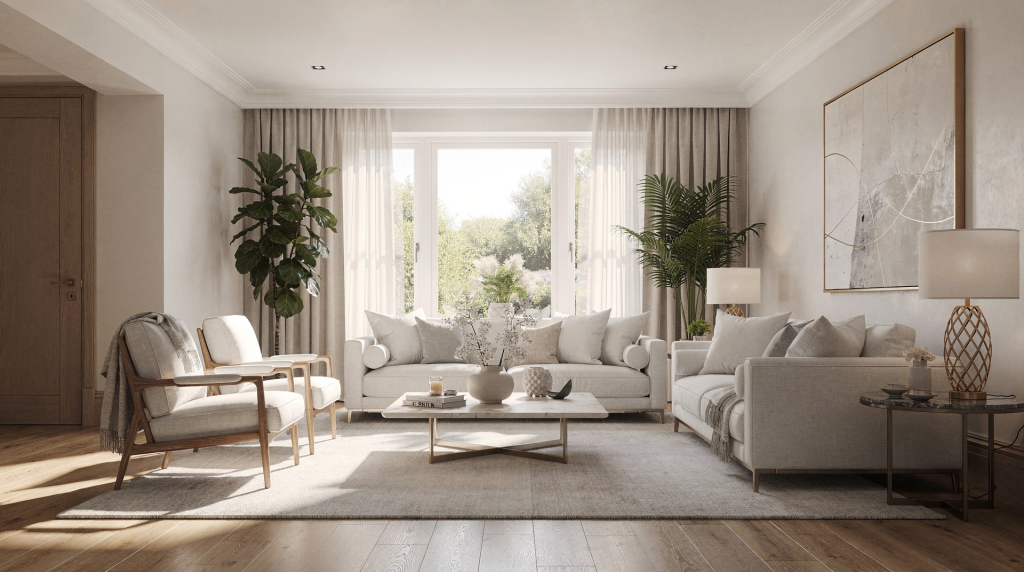
The moment a listing goes live, its first showing has already begun—online, in the thumbnail grid, where a buyer’s thumb hovers for a split second. That single frame decides whether the property gets a click or fades into the scroll. Real estate photography isn’t just about documenting a house; it’s about making someone pause, look closer, and feel the pull of a space they haven’t yet entered.
Strong listing photos do more than make a home look attractive. They clarify scale, show flow, build trust, and create the emotional pull that gets buyers to book a showing. When I approach a property, I’m not just recording rooms—I’m reading how light carves volume, how textures anchor a surface, and how a well-chosen vantage point can turn a corridor into an invitation. Those visual decisions shape whether a buyer scrolls past or leans in.
Why listing photos matter so much
Most home search now starts online, and buyers tend to evaluate listings visually first. That means the photos are not just support material; they are the primary sales asset for the listing page. I often compare a listing photograph to a portrait: you’re not simply documenting features, you’re conveying character. In a home, character lives in the light falling across a floor, the grain of an old hardwood, the rhythm of doorways leading the eye deeper inside. When those elements read clearly, the buyer stops analyzing and starts feeling.
Buyers typically respond to photos in a few immediate ways:
- They decide whether the home feels worth exploring
- They judge brightness, upkeep, and overall condition
- They use the images to understand layout and room-to-room flow
- They compare one listing against another long before scheduling a tour
A weak image set can make a good property seem smaller, darker, or less valuable than it really is. A strong set can do the opposite: create confidence, invite curiosity, and reduce friction in the decision to inquire. I’ve walked into homes that felt generous and warm, yet their listing photos made them look cramped and cold—simply because the photographer didn’t manage light or vertical lines. The gap between reality and representation is where opportunity gets lost.
What professional real estate photography actually changes
Professional photography is not just about sharper files. It changes how the listing is perceived at a fundamental level.
1. It improves first impressions
The first photo often decides whether someone keeps scrolling or opens the listing. That lead image is a visual threshold. If it’s dark, crooked, or cluttered, the buyer’s brain instantly tags the property as neglected. A professional frame with straight verticals, balanced exposure, and a clean foreground signals care and credibility. I always treat the hero shot as the handshake: it needs to be confident, clear, and honest.
2. It makes the space easier to understand
Good composition helps buyers read the home. Wide-angle framing, when used with discipline, shows room proportions and flow without distorting the property into caricature. I shoot from corners or entry points, making sure vertical lines stay true and that the frame includes enough ceiling and floor to anchor scale. This matters because buyers are not just looking for pretty rooms; they are trying to mentally walk through the floor plan and picture how their own life would fit.
3. It creates emotional connection
Photos that show light, texture, and lived-in order help buyers imagine themselves in the space. Emotional connection often lives in the details: the way morning sun glances off a kitchen island, how linen curtains soften a window’s geometry, the tactile quality of a stone backsplash. These aren’t just decorative flourishes—they’re visual cues that say, “You could belong here.” That connection is often what turns passive interest into an inquiry.
4. It filters for better-fit buyers
Accurate, polished photography helps set expectations. When the images truthfully represent the property, the people who book tours are more likely to be serious because they already understand what the home offers. That reduces wasted showings and improves lead quality. I’ve seen agents save days of pointless walk-throughs simply because the photos pre-qualified the audience.
The business impact: why agents should care
Several recent industry reports consistently note that listings with strong photos receive more views, more saves, and more showing requests than listings with low-quality images. The data also links better photography with faster sales and stronger buyer engagement overall. For an agent, this isn’t about pretty pictures—it’s about accelerating the deal cycle. When the photography works, the phone rings more often, and initial objections drop.
For agents, that can translate into:
- More clicks from listing portals
- More time spent on the listing page
- More inquiries and showing requests
- Faster movement through the early stages of the sales funnel
Even when a property does not sell immediately, better photography can help it stand out in a crowded feed and avoid the “scroll past” problem. In a market where attention is the scarcest resource, a well-crafted image set is a competitive advantage.
What makes real estate photos stand out
Not every nice image is an effective listing image. Real estate photography works best when it balances beauty with clarity. The table below breaks down the elements that separate a forgettable snapshot from a frame that earns a second look.
| Element | What good photography does | Why it matters |
|---|---|---|
| Light | Uses natural light as a compositional element, balancing shadows to reveal texture without harsh contrast | Makes rooms feel airy, authentic, and three-dimensional |
| Composition | Chooses a vantage point that explains the room’s geometry and connection to adjacent spaces | Reduces cognitive load; buyer grasps layout instantly |
| Color | Maintains neutral white balance and accurate saturation, avoiding trendy filters | Builds trust; buyer knows the true finish and paint color |
| Staging | Removes visual noise so architecture and volume take center stage | Allows buyer to mentally move in without distraction |
| Sequence | Opens with a hero shot that encapsulates the property’s best asset, then flows logically | Hooks the viewer and guides them through a narrative |
| Consistency | Keeps exposure, color grade, and perspective uniform across the set | Signals professionalism and attention to detail; feels cohesive |
A practical framework for better listing photos
If you are preparing a property shoot, focus on these essentials. The difference between a mediocre set and a compelling one often lies in the quiet preparation before the shutter ever clicks.
Before the shoot
- Declutter every visible surface—remove magnets, personal photos, and small appliances that break the visual flow
- Open blinds and turn on lights where they help the room feel warm; I often use lamps to create pockets of ambient glow that add depth
- Remove personal items that distract from the architecture; the goal is to let the space speak, not the owner’s biography
- Straighten bedding, chairs, rugs, and towels—small misalignments read as carelessness in a still frame
- Check reflective surfaces for visible clutter or camera gear; I walk the space with the agent to catch mirror reflections and shiny floor hazards
During the shoot
- Start with the strongest exterior image, ideally when the light favors the facade
- Capture the key public spaces first: entry, kitchen, living room, primary bedroom—follow the natural path a buyer would take
- Shoot from corners or entry points to show depth; I keep the camera at chest height to maintain a neutral, human perspective
- Keep vertical lines straight—use a geared head or level, and correct any residual tilt in post
- Include enough context to show layout, not just isolated details; a room should read as part of a sequence, not a standalone box
After the shoot
- Correct exposure and color without over-editing; the aim is to reveal what the eye would naturally see
- Keep the home looking realistic—avoid the temptation to make every window a pure white rectangle or every shadow disappear
- Avoid oversaturated skies or unnatural HDR effects that make the image feel synthetic
- Make sure one image set feels visually consistent from first frame to last; a sudden shift in color temperature or contrast breaks the narrative
Common mistakes that make listings disappear
Poor real estate photos often fail for predictable reasons. The biggest problem is not just technical quality; it’s a loss of clarity. Buyers should be able to understand the property quickly and trust what they see. Here are the pitfalls I encounter most often:
- Dark rooms that hide finishes and make spaces feel smaller. The camera sensor doesn’t see like the human eye; without careful exposure blending or supplemental light, shadows swallow detail and volume.
- Overwide lenses that distort proportions. A room stretched into a bowling alley may look “big” but it also looks dishonest, and buyers feel the disconnect when they visit.
- Cluttered countertops and visible personal mess. Visual noise competes with architecture; the buyer’s eye doesn’t know where to land.
- Mixed color temperatures that make the house feel visually noisy. A warm lamp next to a cool window creates a color clash that reads as amateur.
- Crooked lines that make rooms feel unstable. Even a slight tilt triggers a subconscious unease—walls should stand straight.
- Repetitive shots that add length without adding information. Two nearly identical angles of the same corner dilute the gallery’s impact.
- Heavy editing that makes the property look unlike the real thing. When the photos promise a fantasy, the in-person showing becomes a disappointment.
How many photos should a listing have?
There is no universal number, but the set should cover the home thoroughly without becoming repetitive. A strong listing usually includes the exterior, entry, kitchen, living areas, primary suite, secondary bedrooms, bathrooms, and any notable outdoor or lifestyle features.
A useful rule: include every space that helps a buyer understand layout, condition, and livability. Do not inflate the gallery with near-duplicates. I typically aim for 20–25 frames for an average home, asking of each image, “What does this shot tell me about the house?” If two frames convey the same information, I keep the one with better light and stronger composition. A smaller, well-sequenced set is always better than a long set full of weak images.
When professional photography matters most
Professional photography is especially valuable when:
- The property is entering a competitive price bracket, where every edge counts
- The home has strong natural light or architectural character—vaulted ceilings, exposed beams, oversized windows—that can be lost in a casual snapshot
- The layout needs help feeling clear; an awkward floor plan benefits enormously from thoughtful angles that explain flow
- The market is crowded and presentation matters more than ever
- The seller expects premium positioning
- The listing includes unique features that can be missed in average photos, like a custom built-in or a view corridor
It also matters when a property is challenging. Small rooms, awkward floor plans, or older finishes often benefit from skillful lighting and composition more than standard snapshots do. I’ve seen a cramped studio feel airy and intentional simply because the photographer understood where to place the camera and how to balance window light with interior fill.
Quick checklist for agents
Use this before every listing goes live. Run through it as if you were a buyer seeing the gallery for the first time.
- Is the first image strong enough to stop the scroll?
- Do the photos show the home in a logical order, telling a coherent story from curb to closet?
- Are the rooms bright and accurately colored, or do they feel muddy and cold?
- Can a buyer understand the layout from the gallery without reading the description?
- Are clutter, cords, and reflective distractions removed from every frame?
- Does the set feel consistent from image to image, as if one eye captured it all?
- Do the photos make the property feel trustworthy, or do they overpromise?
FAQ
Do real estate photos really affect buyer interest?
Yes, absolutely. Buyers rely heavily on photos when deciding whether to click, save, or skip a listing. I’ve seen properties with professionally crafted images receive three to four times the inquiries of comparable listings with poor visuals. The photo is the first touchpoint, and it must be strong enough to earn a second look.
Can professional photography help a home sell faster?
Industry sources consistently report that higher-quality listing photos are linked to faster sales and stronger engagement. While images alone don’t close a deal, they create a larger pool of qualified buyers, which shortens the time from listing to contract. Think of it as widening the top of the funnel with the right audience.
Should every room be photographed?
Not always, but every important space should be covered. The goal is to help buyers understand the property, not to photograph every possible angle. I ask myself, “What would a buyer expect to see?” A walk-in closet that’s a key selling point deserves a frame; a tiny utility closet probably doesn’t. Prioritize spaces that define livability.
Is editing important in real estate photography?
Yes, but only to a point. Editing should correct and refine the image—balancing exposure, straightening lines, removing color casts—not misrepresent the home. I never add a fireplace glow or swap a sky. The buyer should recognize the house the moment they walk through the door; otherwise, trust erodes.
What matters more: gear or technique?
Technique matters more. Lighting, composition, staging, and sequencing have a bigger impact on listing performance than expensive equipment alone. I’ve produced effective listing sets with a mid-range camera and a good wide lens. The real skill is reading light, choosing the right moment to shoot, and understanding how a space wants to be seen.
Conclusion
Real estate photography helps listings stand out by doing three things at once: it grabs attention, explains the home, and builds trust. In a market where buyers decide quickly, strong visual presentation is often the difference between being overlooked and being shortlisted.
For agents and photographers, the goal is not to make a property look like something it is not. The goal is to present it clearly, honestly, and beautifully enough that the right buyers want to take the next step. Every home is a story waiting for its narrator, and a well-crafted photograph is the opening line.