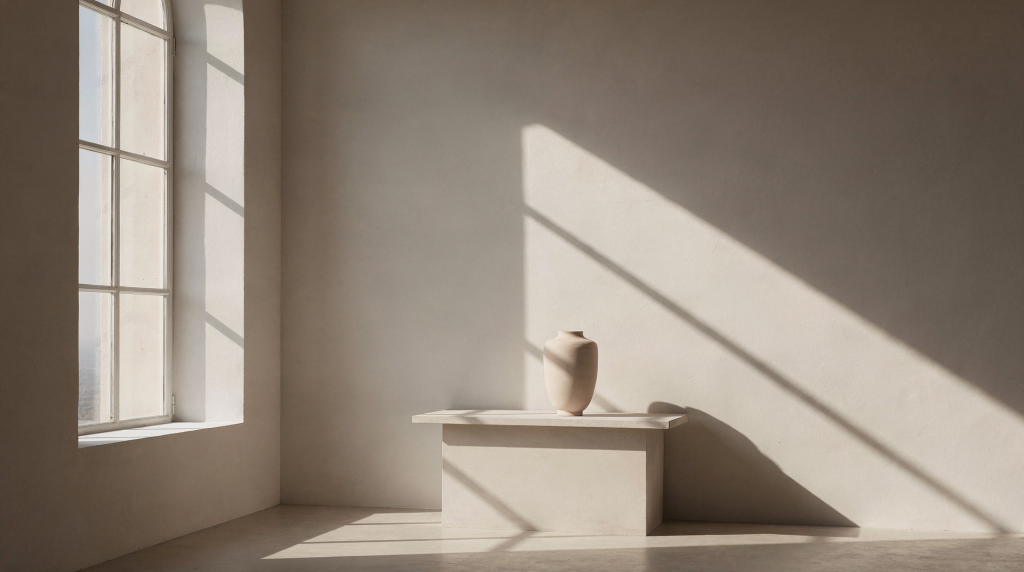
Light does more than reveal a subject in fine art photography — it builds the emotional architecture of an image. The way it falls across a surface, softens into shadow, cuts a crisp edge, or lingers in a corner of a room can transform a straightforward scene into something contemplative, dramatic, or quietly intimate. This is not about technical exposure; it’s about reading light as a visual language and using it to shape how someone feels when they look at a photograph.
Why light matters in fine art photography
In fine art work, light is never just a utility. It defines mood, articulates texture, and gives a photograph its sense of time and atmosphere. Direction, quality, and color temperature all guide the viewer’s reading of an image. A soft overcast sky, for instance, produces a quieter emotional register than hard midday sun — the difference between a whispered suggestion and a declarative statement. Side light carves out form and emphasizes the tactile quality of surfaces, while backlight can separate a subject from its background and create a luminous halo that feels almost metaphysical.
When I walk into a space — whether a gallery, a stairwell, or a sun-drenched living room — I’m not first thinking about aperture or ISO. I’m watching where the light lands, how it moves across walls, and what it chooses to hide. That observational habit is what separates a technically correct photograph from one that resonates.
The poetic qualities of light
“Poetic” light isn’t a technical category you’ll find in a lighting manual. It’s light that carries feeling — a sliver of morning sun crawling across a wall, a reflected glow softening fabric, the gradual fade of evening light over a landscape or an interior. It’s the kind of light that makes you pause, the way you might in front of a painting.
What makes light read as poetic usually comes down to a combination of qualities:
- Softness: gentle transitions between highlight and shadow that feel organic, not abrupt.
- Direction: the angle of light that sculpts form and gives a two-dimensional surface depth.
- Contrast: the relationship between bright and dark areas — not just how much, but where it falls.
- Color temperature: warm or cool tones that shift the emotional temperature of a scene.
- Duration: changing light that creates a sense of passing time and impermanence, reminding us that this exact moment won’t last.
These qualities don’t exist in isolation. A beam of late-afternoon sun through a window might be soft in its diffusion, warm in its color, and directional enough to rake across floorboards — all at once. Recognizing that interplay is what turns observation into a working method.
How to see light like a fine art photographer
Before you touch a camera, learn to stand still and study the scene itself. The first step is pure observation — treating light as a material, not a condition.
Ask these questions
- Where is the light coming from?
- Is it direct or diffused?
- What happens to texture when the light moves?
- Which surfaces reflect light, and which absorb it?
- Does the light create calm, tension, mystery, or clarity?
A practical exercise I return to often: pick one spot and watch it for a full minute. Notice how a slight shift in your position — stepping left, crouching a few inches — can change the entire relationship between light and subject. A wall that looks flat from the front might reveal its plaster texture when lit from the side. A staircase that feels ordinary under even overhead light can become sculptural when a single window throws diagonal shadows across the treads. Small changes in angle often matter more than equipment choices.
Types of light and what they do
| Type of light | Visual effect | Best use in fine art photography |
|---|---|---|
| Soft natural light | Smooth tones, reduced shadows | Quiet portraits, minimal scenes, ethereal moods |
| Side light | Strong texture, visible form | Interiors, still life, landscapes, sculptural subjects |
| Backlight | Separation, glow, rim highlights | Silhouettes, translucent objects, atmospheric compositions |
| Hard light | Crisp shadows, graphic contrast | Bold, dramatic, highly structured images |
| Golden hour light | Warm color, low angle, long shadows | Intimate, lyrical images with strong texture |
| Overcast light | Even illumination, low contrast | Subtle compositions and portraits with delicate tonal shifts |
Each type of light tells a different story. Soft natural light from a north-facing window can make an interior feel serene and weightless — ideal for a minimal, gallery-like room. Side light raking across a brick wall or a textured fabric brings out every imperfection and detail, which can be exactly what you want when you’re emphasizing craftsmanship. Backlight transforms ordinary objects: a glass vase becomes a vessel for glowing edges, a person in a doorway becomes a silhouette with presence. The key is matching the quality of light to the emotional intent of the image, not just reaching for what’s pretty.
A practical method for working with light
Fine art photography improves when light is treated deliberately rather than opportunistically. A simple workflow helps move from reactive snapping to intentional image-making.
1. Choose the emotional tone
Decide what the image should feel like before you shoot. Calm? Isolated? Noble? Fragile? That answer should guide your lighting choice. If you want a photograph of a lobby to feel grand but welcoming, you might wait for soft, diffused daylight rather than harsh midday beams that create severe contrast. If you’re after tension, a single hard source cutting across the frame might serve you better.
2. Find the dominant light source
Identify the strongest source first. In natural-light work, that may be a window, skylight, open shade, or direct sun. In mixed-light scenes — say, a room with both daylight and warm interior lamps — ignore secondary sources until the main direction is clear. Once you know where the primary light is coming from, you can decide whether to work with it or modify it.
3. Position the subject for shape
Move the subject, or move yourself, until the light starts describing form. A small change in angle can reveal contours that were invisible a moment earlier. When photographing a stairwell, for instance, shifting a few steps to the side can turn a flat, evenly lit scene into one where each step catches light differently, creating rhythm and depth.
4. Use shadow intentionally
Shadow is not a problem to eliminate. It creates depth, rhythm, and negative space. In many fine art images, the shadow carries as much emotional weight as the highlight. A dark corner in an otherwise bright room can feel like a held breath; a long shadow stretching across a floor can anchor a composition and suggest time passing.
5. Check the brightest highlight
If the brightest area becomes distracting, the image can lose balance. Guide the viewer’s eye by placing a bright area where it supports the composition instead of dominating it. In an interior shot, a patch of direct sun on a white wall might pull attention away from the carefully arranged furniture. Sometimes moving a curtain or waiting ten minutes for the light to shift solves the problem more elegantly than any post-processing trick.
Light as composition
In fine art photography, light and composition are inseparable. Leading lines, framing, negative space, and centered symmetry all change meaning once light enters the frame. A centered composition lit evenly can feel calm and formal — almost ceremonial. The same subject lit from one side may feel intimate or uneasy, as if something is about to happen. Negative space becomes stronger when it holds soft light or deep shadow; it turns from emptiness into a presence. Composition doesn’t merely contain light; it directs it, channels it, and gives it a structure to play against.
Think of a long corridor: symmetrical, with a window at the far end. If the light is flat, the corridor is just a passage. If a shaft of light cuts diagonally across the floor and wall, the same corridor becomes a narrative about journey and destination. The composition didn’t change — the light did.
Common mistakes to avoid
- Shooting only when the light is “good” instead of learning to work with difficult light — overcast days, harsh noon, mixed color temperatures all have their own voice.
- Flattening scenes with front light when the subject would benefit from side light, especially in interiors where texture and depth are everything.
- Ignoring shadows and treating them as exposure errors rather than compositional elements.
- Chasing dramatic contrast without considering emotional fit — high drama can feel forced in a scene that calls for subtlety.
- Overediting tones until the original quality of the light disappears; the photograph loses its sense of place and time.
- Using one lighting style for every subject instead of responding to the unique character of the scene in front of you.
Where poetic light appears most often
Poetic light isn’t rare — it’s everywhere once you start looking. But it does tend to gather in places that invite stillness and observation:
- Window light in interiors, especially when it falls across textured surfaces like linen, wood, or plaster.
- Early morning streets and facades, where the low angle of the sun picks out architectural details.
- Galleries and stairwells, where light often enters from unexpected angles and creates a sense of transition.
- Reflective surfaces — water, glass, polished stone — that catch and redirect light in surprising ways.
- Transitional weather: fog, haze, and cloud cover that soften the world and turn light into a diffuse, enveloping presence.
- Threshold spaces — doorways, archways, covered walkways — where light changes from one environment to another, marking a passage.
These situations are especially powerful because they reveal light as an event, not just an illumination source. In a lobby with a skylight, for example, the light isn’t static; it moves across the floor throughout the day, creating a living, breathing element that no artificial setup can replicate.
Checklist for evaluating light on location
- Does the light support the mood you want?
- Is the main source clear?
- Are the shadows adding structure or distraction?
- Is texture visible where it matters?
- Do highlights feel controlled?
- Would a small change in position improve the scene?
- Is the color temperature helping the image, or working against it?
A simple editing mindset
Post-processing should refine the feeling of the light, not replace it. Adjust tonal balance carefully. Preserve shadow detail when it contributes to atmosphere, and avoid lifting every dark area just to reveal information. Some of the most powerful fine art photographs depend on restraint — deep shadows that hold mystery, highlights that are allowed to blow out slightly where they meet a window frame, creating a sense of brightness you can almost feel.
Think of editing as restoring the original conversation between light and subject, not rewriting it. If the light on location had a particular warmth or coolness, don’t neutralize it into oblivion. If a shadow was meant to be deep, let it be deep. The goal is to honor what the light was doing, not to impose a generic “perfect exposure” across the frame.
Final thoughts
The poetics of light in fine art photography begin with attention. Light becomes poetic when it reveals form, suggests emotion, and leaves room for the viewer to feel rather than merely see. Once you learn to read its direction, softness, and shadow, every location becomes a potential image — a stairwell, a quiet corner of a gallery, a sunlit living room at the end of the day. The camera is just the tool; the real work is learning to see light as a material with its own voice.
FAQ
What makes light “poetic” in photography?
Light feels poetic when it creates mood, depth, and emotional resonance instead of simply exposing the scene. It’s the difference between light that shows you what something looks like and light that makes you feel something about it.
Is soft light always better for fine art photography?
No. Soft light is useful for quiet or subtle work, but hard or directional light can be more expressive when you want tension or drama. The choice depends entirely on the story you’re telling. A delicate still life might call for softness; an architectural detail might demand the crisp shadows of hard light.
How can I practice seeing light better?
Spend time observing one scene from different angles and at different times of day. Note how shadows, color, and texture change with small shifts in position. Try revisiting the same interior or street corner under different weather conditions and at different hours — you’ll start to build a mental library of how light behaves.
Do I need artificial light for fine art photography?
Not necessarily. Natural light is often enough, especially when the goal is atmosphere and realism. Artificial light becomes useful when you need more control — for example, to shape light in a windowless room or to balance mixed lighting. But many of the most evocative fine art photographs rely solely on available light, carefully observed.
What is the biggest beginner mistake with light?
Trying to correct every shadow and flatten every contrast. Fine art photography often becomes stronger when light and shadow are allowed to work together. Shadows aren’t mistakes; they’re part of the composition’s emotional structure. Learning to leave them alone is a skill in itself.