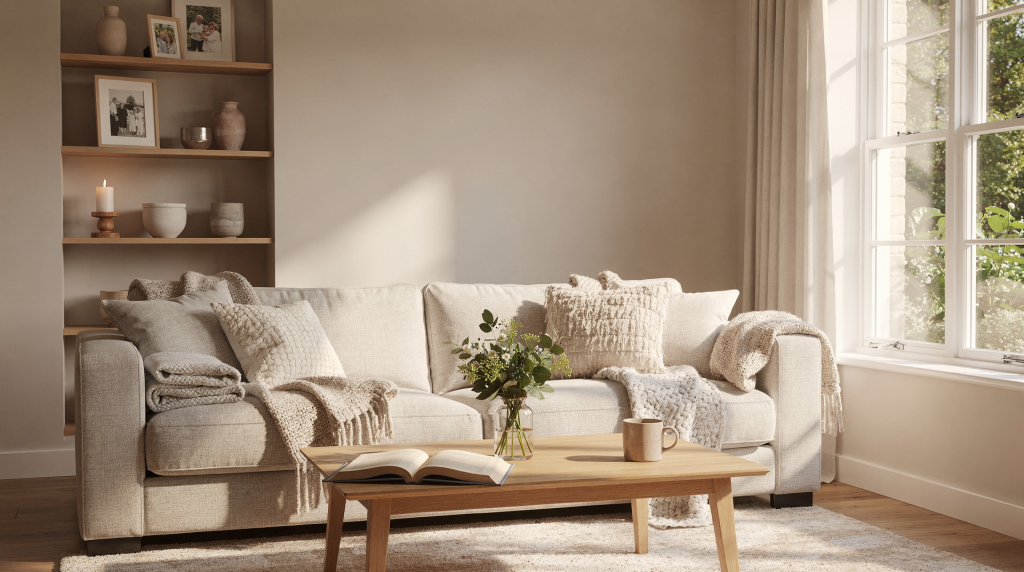
A property feels like home the moment a buyer stops evaluating square footage and starts picturing morning light across the kitchen table, or how their favourite chair would sit in the living room. That shift doesn’t happen by accident. It’s built through a deliberate mix of decluttering, warm but neutral styling, generous natural light, and photography that tells a believable story about how the space actually works.
Why “feels like home” matters in real estate
Buyers rarely fall in love with a floor plan. They respond to atmosphere, to the quiet sense that a home can support their daily rhythms, relationships, and taste. A property that reads as a series of well-proportioned boxes won’t linger in memory. One that feels like a place where life could unfold—that’s the listing they’ll return to.
That’s why the goal isn’t to make every room look heavily decorated. It’s to create a space that feels lived-in enough to be human, but open enough for buyers to mentally move in. The balance is delicate: too much staging and the home feels like a showroom; too little and it feels abandoned. Getting it right means understanding that emotion, not just aesthetics, drives decisions.
What makes a property feel like home
Several elements work together to create that immediate sense of welcome. When I walk into a room—whether it’s a sun-drenched living area or a compact entryway—I’m reading it the way I’d read a photograph: checking how light defines the space, whether the composition guides the eye naturally, and if the textures invite touch. The same principles apply when preparing a property for listing.
- Clarity: the room’s purpose is obvious, so buyers understand how to use it without guesswork.
- Warmth: lighting and texture make the space feel inviting rather than stark—think of the difference between a cool, shadowless office and a softly lit reading nook.
- Neutrality: the home appeals to more people when it doesn’t feel too personal or tied to a specific identity.
- Flow: clear pathways and sightlines help buyers read the layout easily, much like a well-composed photograph leads the eye through the frame.
- Story: small details suggest daily life without overwhelming the room—a folded throw, a book left on a side table, the gentle curve of a ceramic bowl.
Start with the emotional brief, not the decor
Before moving furniture or styling shelves, I always ask one question: what does this room need to make a buyer feel?
A living room might need to feel relaxed and social—a place where conversations happen easily. A kitchen might need to feel efficient and clean, with work surfaces that suggest cooking rather than clutter. A primary bedroom should feel calm and restorative, a retreat from the world. A front entry should feel welcoming and easy to navigate, setting the tone for the entire home.
This “emotional brief” keeps staging decisions focused. Without it, rooms often become either too empty—leaving buyers unable to interpret the space—or too overdone, suffocating the imagination. It’s the same discipline I apply when composing a photograph: decide what the image needs to communicate, then remove everything that distracts from that message.
The core formula: clean, open, warm, believable
The easiest way to make a property feel like home is to balance four qualities. They’re simple in theory, but each requires attention to detail and an understanding of how visual cues shape perception.
1. Clean
A spotless space reads as cared for. Dust, streaks, and clutter break the illusion immediately—they pull the eye toward maintenance issues rather than the room’s potential. In photography, even a small smudge on a mirror or a fingerprint on a stainless steel surface becomes magnified. I always do a final walkthrough with the camera’s perspective in mind, checking surfaces at eye level and against the light.
2. Open
Rooms need breathing room. Pulling furniture away from walls, reducing excess pieces, and clearing surfaces helps the space feel larger and calmer. This isn’t just about physical square footage; it’s about visual rest. In a photograph, negative space around objects gives the eye a place to pause, making the composition feel intentional rather than cramped. The same principle works in staging: a few well-placed pieces with room around them feel more luxurious than a room stuffed with furniture.
3. Warm
Warm light, soft textiles, and a few natural details keep the home from feeling cold or transactional. I often think of warmth as the difference between a gallery’s white cube and a lived-in artist’s studio. One is pristine but impersonal; the other invites you to stay. In real estate, warmth comes from layered lighting (never just a single overhead fixture), tactile materials like linen or wool, and organic elements—a wooden bowl, a branch in a vase, the texture of a woven rug.
4. Believable
The room should still look like a real home, not a hotel lobby. Buyers connect with spaces that feel practical and subtly personal without being specific to one family. This is where staging often goes wrong: too many props, too much symmetry, and the space loses its soul. I aim for a look that suggests someone just stepped out—a book open on the arm of a sofa, a half-full glass of water on the nightstand, a pair of slippers by the bed. These tiny narratives make a room feel inhabited, not decorated.
Room-by-room staging priorities
| Space | What to emphasize | What to remove | What to add |
|---|---|---|---|
| Living room | Conversation, comfort, openness | Excess cushions, oversized decor, personal photos | Neutral pillows, one or two textured throws, simple styling that doesn’t compete for attention |
| Kitchen | Clean surfaces, function, brightness | Small appliances, papers, magnets, clutter | One or two intentional items, like a bowl of fruit or a coffee setup that suggests morning ritual |
| Primary bedroom | Calm, rest, symmetry | Laundry, bright decor, too many accessories | Crisp bedding, matching lamps, minimal art that soothes rather than stimulates |
| Bathroom | Hygiene, light, freshness | Trash, products, toilet clutter | Folded towels, clear counters, subtle styling—a single stem in a small vase can transform the room |
| Entryway | Welcome, ease, first impression | Shoes, bags, pet items, coats | Clean mat, soft lighting, simple console styling that offers a place to set keys without visual noise |
How to stage a home so it feels lived in, not staged
The best rooms usually follow the same pattern: they feel edited, not decorated. This is a distinction I learned in fine art photography—editing means choosing only what strengthens the composition, while decorating often adds layers that dilute the message. In staging, that translates to restraint with purpose.
Use fewer, better objects
Too many accessories make a space feel busy and small. A few objects with clear shape and texture create a calmer result. When I style a shelf or a coffee table, I think about the negative space between items as much as the items themselves. A single ceramic vessel on a stack of books reads as intentional; a cluster of small trinkets reads as clutter. The eye needs places to rest.
Keep personal identity low
Family photos, bold hobbies, religious items, and niche collections can distract buyers from imagining themselves in the home. This isn’t about erasing personality—it’s about creating a neutral canvas. I’ve seen otherwise beautiful rooms lose their appeal because a buyer couldn’t see past the owner’s extensive sports memorabilia or a wall of family portraits. Remove these before the shoot, and the space opens up to a wider audience.
Add soft evidence of life
A folded throw on the sofa, fresh towels in the bath, or a bowl of fruit in the kitchen can suggest comfort without locking the home to one personality. These small gestures act like visual punctuation—they tell the viewer that life happens here, but they don’t specify whose life. In photography, I often use these details to anchor a composition, giving the eye a point of entry that feels natural rather than staged.
Repeat tones and materials
Consistency makes a home feel intentional. Repeating warm wood, soft white, linen, and muted green or beige helps different rooms connect visually. When I photograph a property, I look for these threads—a wooden floor that echoes a kitchen counter, a linen cushion that picks up the tone of a bedroom wall. This repetition creates a visual rhythm that feels cohesive and calming, much like a well-curated gallery wall where every piece relates to the next.
Lighting is what turns a house into an inviting home
Light changes mood faster than almost any styling choice. Bright, harsh, or uneven light can make rooms feel clinical, while soft natural light and balanced interior lighting make them feel welcoming. As a photographer, I’m trained to read light first—its direction, quality, and colour temperature—because it shapes every other element in the frame. The same principle applies to how a buyer experiences a space in person or through listing photos.
Practical lighting rules
- Open blinds and curtains fully before shooting—natural light is the most flattering source, and it helps rooms feel larger and more connected to the outdoors.
- Turn on interior lights to balance darker areas, especially in hallways, bathrooms, and corners that daylight doesn’t reach. This layered approach prevents harsh shadows and creates a more even exposure.
- Use warm-toned bulbs where possible (2700K–3000K) for a softer, more residential feel. Cool white light can make a space feel sterile, like a hospital corridor.
- Shoot when daylight is generous but not flat or harsh—early morning or late afternoon often provides directional light that adds depth and texture to surfaces.
- Keep windows clean so the light actually looks good on camera. Smudges and dust scatter light and reduce contrast, making the whole image feel muddy.
If a room feels cold, the issue is often not the furniture. It’s the lighting temperature, the shadow pattern, or the lack of layered light sources. I’ll often add a floor lamp in a dark corner or swap out a cool bulb before even considering moving a sofa. Light is the invisible stager—it can make a modest room feel expansive and a grand room feel intimate.
The role of photography in making a property feel like home
A staged home can still feel flat if the images are poorly composed. Photography should preserve the sense of welcome while also showing layout and scale. This is where the technical and the emotional intersect: a well-composed photograph doesn’t just document a room; it translates the feeling of being there into a two-dimensional frame.
What good listing photos do
- Show how rooms connect, using sightlines that reveal flow from one space to another—a view from the living room into the dining area, for example, tells a story of how the home functions as a whole.
- Capture the best use of each space, not just a corner. I often shoot from a doorway or a slightly elevated angle to give a sense of volume without distortion.
- Keep vertical lines straight and compositions balanced. Converging verticals make rooms feel like they’re falling backward; a level camera keeps the architecture grounded and believable.
- Show enough detail to feel real, but not so much that the room feels cramped. A wide-angle lens can help, but only when used with restraint—too wide and the space looks distorted and unnatural.
A useful test
Look at the photo and ask:
- Can a buyer understand how this room functions?
- Does the image feel calm enough to live in?
- Is the space inviting without looking artificially perfect?
- Can someone imagine their own furniture, routine, and habits here?
If the answer is no, the property may be documented accurately but not emotionally. And in real estate, emotion is what moves people from browsing to booking a viewing.
Common mistakes that destroy the “home” feeling
Over-staging
Too many pillows, props, and decorative pieces can make the property feel styled for a catalog instead of a real buyer. I’ve walked into living rooms where every surface held a vignette—candles, books, trays, flowers—and the overall effect was suffocating. The eye had nowhere to land, and the room felt more like a retail display than a home.
Under-staging
An empty or overly bare space may look bigger in theory, but often feels cold and hard to interpret. Without furniture, buyers struggle to gauge scale—a large empty room can feel smaller than a well-furnished one because there’s no reference point. A single chair and a rug can anchor a room and give it purpose.
Over-personalization
Personal items narrow the audience and make it harder for buyers to project themselves into the home. I’ve seen listings where every wall was covered in family photos, and potential buyers spent more time looking at the owners’ lives than imagining their own. The goal is to create a space that feels universally welcoming, not a shrine to one family’s history.
Ignoring scale
Furniture that is too large makes rooms feel cramped; furniture that is too small makes them feel awkward and unfinished. Scale is one of the most common issues I notice in both staging and photography. A massive sectional in a small living room dominates the frame and shrinks the perceived space. Conversely, a tiny dining table in a grand room looks lost. Always test furniture placement by viewing the room through the camera—it reveals scale issues that the naked eye often overlooks.
Poor maintenance
A beautiful room still fails if there are smudged windows, visible damage, dirty floors, or a tired mattress. These details scream neglect, and they undermine all the effort put into staging and lighting. Before any shoot, I do a meticulous sweep: check for scuffs on baseboards, fingerprints on light switches, water spots on faucets. In a photograph, these flaws become focal points, distracting from the home’s best features.
A practical pre-shoot checklist
Use this checklist the day before listing photos. It’s the same one I run through on every shoot, and it catches the small things that make a big difference in the final images.
- Remove personal photos, papers, and memorabilia—anything that ties the space to the current owner.
- Clear kitchen counters and bathroom surfaces; even a single toaster or toothbrush holder can clutter the frame.
- Store pet bowls, toys, cords, and chargers—these everyday items look messy on camera and break the illusion of a pristine home.
- Open blinds and clean the windows inside and out; natural light is your best asset, but only if it’s unobstructed.
- Turn on lamps and replace dim or cool-toned bulbs with warmer ones (2700K–3000K).
- Straighten rugs, bedding, and cushions; a crooked rug pulls the eye and makes the whole room feel off-balance.
- Pull furniture slightly away from walls if needed—even a few inches creates a sense of depth and flow.
- Clean mirrors, taps, appliances, and visible fixtures until they gleam; reflections can reveal dust and streaks that are invisible in person.
- Add one or two quiet styling pieces per room—a vase, a book, a folded textile—but no more.
- Walk through the home and look for anything that interrupts flow: a chair blocking a doorway, a cord snaking across the floor, a rug that trips the eye.
How to create a home feeling on different budgets
| Budget level | What to do | Result |
|---|---|---|
| Low | Declutter, clean deeply, improve lighting, edit personal items | Stronger perceived care and space; the home feels respected and ready |
| Medium | Add new textiles, matching lamps, simple accessories, small repairs | More warmth and visual cohesion; rooms begin to feel curated rather than just tidy |
| High | Full staging, professional photography, upgraded finishes, cohesive styling | Strongest emotional response and market polish; the property tells a complete, aspirational story |
Even on a modest budget, decluttering and lighting improvements can change how a property feels more than expensive decor. I’ve seen small, dated apartments transformed by nothing more than a thorough cleaning, warm bulbs, and the removal of excess furniture. The bones of a home often reveal themselves when the distractions are gone.
When minimalism works and when it doesn’t
Minimal styling works well in smaller homes, modern interiors, and properties with strong architectural character. It can also help buyers focus on layout and natural light—two of the most valuable assets in any listing. When I photograph a minimalist space, I lean into the geometry: clean lines, open sightlines, and the interplay of light and shadow become the subject.
But minimal does not mean empty. If there is no warmth, no texture, and no visual cue for function, the home can feel unfinished instead of inviting. I’ve walked into rooms that were stripped so bare they felt like a gallery awaiting an exhibition—interesting, but not somewhere you’d want to curl up with a book. The right balance is usually:
- enough furniture to define each room’s purpose,
- enough softness to humanize the space,
- and enough restraint to keep the buyer’s imagination active.
A single armchair with a linen throw, a floor lamp, and a small side table can do more to sell a room than a full suite of matching furniture that leaves no room for dreaming.
A simple step-by-step approach
Step 1: Define the story of each room
Decide what each room should communicate: rest, gathering, efficiency, or flexibility. This becomes your north star for every decision that follows.
Step 2: Remove distractions
Take out anything that distracts from that story. Be ruthless—if an object doesn’t support the emotional brief, it doesn’t belong in the frame.
Step 3: Add functional styling
Use only objects that support the room’s purpose. A kitchen might get a wooden cutting board and a bowl of lemons; a bedroom might get a stack of books and a soft throw. Each item should earn its place.
Step 4: Balance the light
Make sure the room feels bright, warm, and even. Walk around at different times of day to see how the light changes, and adjust lamps and window treatments accordingly. If a corner stays dark, add a light source—it will pay off in photos and in person.
Step 5: Photograph with flow in mind
Shoot angles that show how the space works together, not just how it looks from one corner. I often start in a far corner and shoot toward the main light source, capturing the room’s depth and the relationship between areas. A series of images should feel like a walk through the home, each photo leading naturally to the next.
FAQ
What makes a house feel like home to buyers?
A house feels like home when it is clean, easy to understand, warmly lit, and styled just enough for buyers to imagine their own lives there. It’s a combination of sensory cues—soft light, tactile surfaces, clear purpose—that together signal comfort and possibility.
Should personal items be removed completely?
Yes, in most listing photos. Removing personal items helps buyers focus on the property instead of the current owner. I treat it as creating a blank canvas: the architecture and light become the main characters, not the owner’s collection of souvenirs.
How can I make a home feel warm without cluttering it?
Use layered lighting, soft textures, and a few carefully chosen objects instead of many decorative items. Think of warmth as a quality of light and material, not a quantity of stuff. A single wool throw over a chair can do more than a dozen knick-knacks.
Is empty staging better than furnished staging?
No. Empty rooms can feel cold and make scale harder to judge. Furnished or lightly staged rooms usually feel more welcoming and easier to understand. Even a minimal setup—a rug, a lamp, a chair—gives the eye a reference point and helps buyers imagine their own belongings in the space.
What is the biggest mistake in listing presentation?
The biggest mistake is trying to impress instead of helping buyers imagine themselves living there. That shift changes everything about staging and photography. When you prioritize emotional connection over visual wow-factor, the home starts to speak for itself.
Conclusion
Making a property feel like home is not about filling it with decor. It’s about creating clarity, warmth, and enough restraint for buyers to see themselves in the space. When staging, light, and photography work together, a home feels both aspirational and believable—and that combination is what sells the feeling, not just the floor plan. In the end, the most successful listings are the ones where a buyer walks in and thinks, “I could live here,” before they’ve even checked the square footage.